
 Subtica Team
20 min read
Customer Lifetime Value (CLV): How to Calculate Customer Lifetime Value and Increase Subscription Revenue
Customer Lifetime Value (CLV) is the foundation of sustainable subscription growth. For iOS apps, where recurring revenue defines success, understanding the lifetime value of a customer helps determine how much a customer is worth, how much a customer will generate, and how to allocate marketing budgets efficiently.
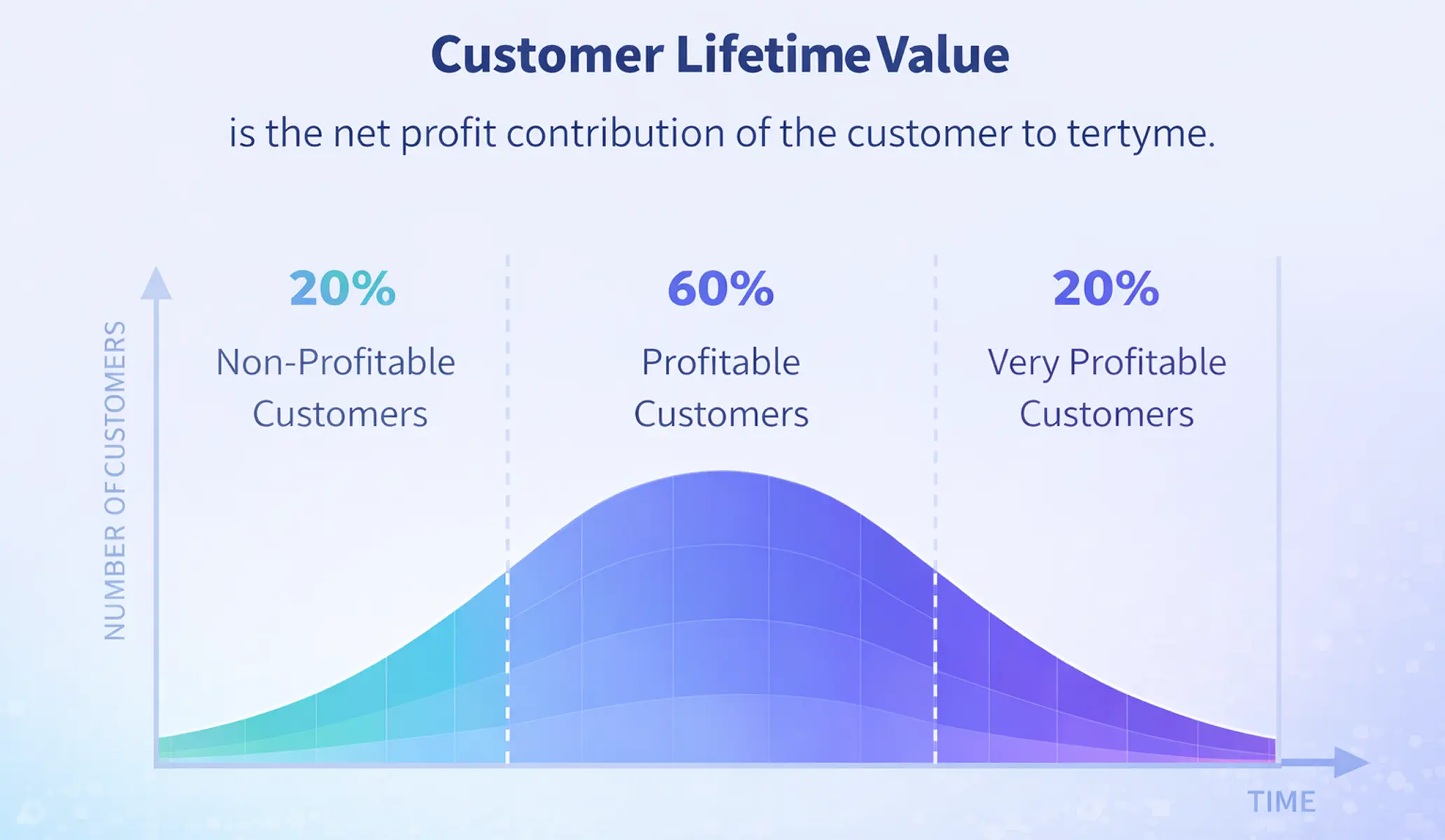
For subscription businesses, CLV connects customer behavior, customer satisfaction, customer loyalty, and revenue forecasting into one strategic metric. When companies use CLV correctly, they can optimize the entire customer lifecycle and maximize long-term value.
Subtica — Analytics for Subscription iOS Apps — helps teams measure CLV, apply a predictive model, and act on CLV effectively using structured Apple subscription customer data.

What Is Customer Lifetime Value (CLV)?
Customer Lifetime Value measures the revenue generated by a customer over the entire customer relationship — from first subscription to churn.
It answers a simple but critical question:
How much a customer brings to a business across customers' lifetime?
CLV reflects:
- Customer lifespan
- Average order value
- Transactions a customer completes
- Customer retention rates
- Customer engagement
- Upsells and renewals
For subscription apps, the full customer journey matters more than a single payment. The lifetime value of a customer depends on the duration of customer engagement and how effectively you manage the customer relationship over time.
Customer Lifetime Value Meaning for iOS Subscription Apps
In subscription apps, CLV is tied directly to:
- Subscription renewals
- Upgrade flows
- Pricing structure
- Customer segment behavior
- Customer relationship management
An average customer might subscribe for three months, while a high CLV customer stays for years. Understanding CLV by customer segment reveals which acquisition channels bring valuable customers and which campaigns attract users with short average customer lifespan.
With Subscription Analytics, teams can analyze CLV per cohort and identify long-standing customer patterns within the customer base.
CLV and LTV: Are They the Same in Subscription Analytics?
CLV and LTV are often used interchangeably. In practice, both describe the lifetime value of a customer.
However:
- Basic CLV usually refers to historic CLV — past revenue generated by a customer.
- LTV often includes predictive elements, estimating what a customer will generate in the future.
For iOS subscription businesses, predictive LTV is critical. Using LTV Prediction, teams can estimate how much a customer is likely to generate and forecast long-term value before churn happens.
Why Customer Lifetime Value Is Important for Sustainable Growth
The importance of customer lifetime value lies in its ability to connect marketing, product strategy, and financial planning.
Without CLV, companies cannot:
- Determine how much a customer is worth
- Decide how much to invest in marketing
- Understand individual customer value
- Evaluate long-term customer relationships
CLV allows teams to shift focus from short-term revenue to customer relationships over time. Instead of asking what the average customer spends today, businesses can understand the entire customer lifecycle.
Why Is Customer Lifetime Value Important for Subscription Businesses?
Subscription models depend on retention. If the average customer lifespan is short, revenue stagnates. If retention improves, long-term value compounds.
CLV looks at revenue generated by a customer across the full customer journey. It reveals whether a customer is valuable, how likely a customer is to renew, and how much you can expect from a customer over the entire relationship.
Companies use CLV to:
- Increase the value of existing customer cohorts
- Improve customer experience
- Strengthen customer loyalty
- Build predictable revenue
The Importance of Customer Lifetime Value for Revenue Forecasting
Revenue forecasting requires understanding what a customer will generate in the future.
By combining CLV with Revenue Forecasting, subscription apps can project:
- CLV per acquisition channel
- Revenue based on customer retention rates
- Long-term revenue based on customer segment behavior
Predictive CLV models transform customer data into forward-looking financial intelligence.
How CLV Impacts Customer Acquisition Costs and Profitability
Marketing decisions must be based on CLV.
If customer acquisition cost (CAC) exceeds CLV, the business loses money. If CLV is significantly higher, growth becomes scalable.
For example:
If average CLV is $300 and CAC is $100, the customer is worth acquiring.
If average CLV is $70 and CAC is $100, the customer to a business becomes unprofitable.
Understanding how valuable a customer is helps marketing teams invest in the right customer segment.
How CLV Helps Increase Customer Retention and Reduce Churn
Tracking CLV highlights where churn occurs in the customer lifecycle.
If customer might cancel during onboarding, improving the customer experience can extend the duration of customer engagement.
CLV effectively identifies:
- Customer satisfaction issues
- Bad customer service impact
- Weak onboarding flows
- Declining customer engagement
Improving retention directly increases the lifetime value of a customer.
Using CRM and Subscription Analytics to Track Customer Value
Customer relationship management plays a major role in managing customer relationships over time.
By integrating App Metrics and Subscription Analytics, teams can:
- Measure CLV accurately
- Track CLV by customer segment
- Analyze individual customer behavior
- Understand the full customer journey
Tracking CLV manually is risky. Structured analytics platforms like Subtica automate tracking CLV across the entire customer lifecycle.
How to Calculate Customer Lifetime Value (CLV)
To calculate CLV using subscription data, you need:
- Average order value
- Average customer lifespan
- Customer retention rates
- Revenue generated by a customer
The basic CLV formula:
CLV = Average Order Value × Average Customer Lifespan
This represents basic CLV. However, subscription apps require deeper analysis based on customer data and cohort performance.
Customer Lifetime Value Formula for Subscription Apps (Table)
A more advanced formula includes:
CLV = ARPU × Customer Lifespan
or
CLV = (Average Revenue per Period × Gross Margin) × Retention Duration
Using ARPU & ARPPU Analytics helps align CLV with monetization metrics.
Step-by-Step: How to Calculate Customer Lifetime Value
- Determine average order value
- Calculate average customer lifespan
- Measure customer retention rates
- Analyze transactions a customer completes
- Calculate CLV using structured subscription data
This approach ensures CLV per channel and CLV by customer segment are accurate.
How to Measure Customer Lifetime Value Using Subscription Data
Subscription apps must measure CLV based on:
- Renewal events
- Upgrade flows
- Cohort performance
- App Store analytics
Using Revenue Tracking and Cohort Analysis, teams can measure CLV automatically without relying on spreadsheets.
Common Mistakes When You Calculate CLV
- Using historic CLV without predictive insights
- Ignoring customer segment differences
- Overlooking bad customer service impact
- Failing to include the entire customer lifecycle
- Not accounting for customer satisfaction and engagement
These mistakes distort how much a customer is worth.
Customer Lifetime Value Models
CLV can be calculated using different models depending on business maturity.
Historical CLV Model
Historic CLV measures revenue generated by a customer in the past.
It helps analyze:
- Average CLV
- High CLV cohorts
- Revenue trends
- Customer relationships over time
But it does not predict future behavior.
Predictive Customer Lifetime Value Model
Predictive CLV uses a predictive model to estimate what a customer will generate in the future.
It identifies:
- Likely a customer to churn
- High CLV potential users
- Customer segment growth potential
- Long-term customer relationships
Predictive models allow teams to act on CLV instead of reacting too late.
Customer Lifetime Value Models for iOS Subscription Apps
Subscription apps require models that incorporate:
- Renewal probability
- Subscription tiers
- Customer behavior patterns
- Entire customer lifecycle analysis
Subtica provides built-in LTV Prediction tailored for subscription apps.
How Predictive CLV Improves Revenue Forecasting
Predictive CLV connects customer data to financial forecasting.
It enables:
- Forecasting revenue generated by a customer
- Estimating long-term value
- Understanding what you can expect from a customer
- Planning marketing budgets confidently
How to Measure and Track Customer Lifetime Value in iOS Apps
Accurate CLV depends on structured analytics infrastructure.
How to Track Customer Lifetime Revenue by Cohort
Using Cohort Analysis and Cohort Table features, teams can:
- Compare CLV per cohort
- Identify high CLV segments
- Analyze average CLV trends
- Measure customers’ lifetime performance
Measure Customer Lifetime by Subscription Tier and Acquisition Channel
Not all users are equal.
CLV per acquisition channel reveals which campaigns attract valuable customers. CLV by customer segment shows which subscription tier drives the most long-term value.
Using Cohort Tables to Measure Customer Lifetime Trends
Cohort tables help visualize how revenue and retention evolve across different groups of users over time. Instead of looking only at average lifetime value, cohort analysis shows how performance changes based on acquisition date, subscription tier, or marketing channel.
Below is a simplified example of how a cohort table can measure lifetime trends in a subscription app:
| Cohort (Acquisition Month) | Month 1 Revenue per User | Month 3 Revenue per User | Month 6 Revenue per User | Average Lifespan (Months) | Projected CLV |
|---|---|---|---|---|---|
| January 2025 | $12 | $28 | $55 | 8 | $96 |
| February 2025 | $15 | $35 | $70 | 11 | $165 |
| March 2025 | $10 | $20 | $38 | 6 | $60 |
How to Interpret This Table
- Revenue per User Over Time shows monetization growth across the lifecycle.
- Average Lifespan highlights retention strength per cohort.
- Projected CLV estimates long-term revenue potential.
- Cohorts with stronger Month 3–6 performance typically indicate higher engagement and better onboarding quality.
- Comparing cohorts helps identify which acquisition channels drive higher lifetime revenue.
Cohort tables provide a structured way to measure trends, compare segments, and identify which groups generate sustainable subscription growth.
App Metrics Required to Measure Customer Lifetime Value
To measure CLV effectively, you need:
- Retention metrics
- ARPU
- Churn rates
- Subscription duration
- Customer engagement metrics
All available through structured App Store Analytics and Revenue Analytics.
Customer Lifetime Value Formula Explained (With Practical Example)
Let’s assume:
Average subscription = $15/month
Average customer lifespan = 10 months
CLV = $15 × 10 = $150
This represents average CLV. High CLV customers may stay longer or upgrade.
CLV Calculation Example for a Subscription App (Table)
Below is a practical example of how Customer Lifetime Value (CLV) can be calculated for different subscription segments within an iOS app:
| Customer Segment | Average Monthly Revenue (ARPU) | Average Lifespan (Months) | Retention Rate | Calculated CLV |
|---|---|---|---|---|
| Basic Plan Users | $12 | 6 | 65% | $72 |
| Standard Plan Users | $18 | 9 | 72% | $162 |
| Premium Plan Users | $25 | 14 | 80% | $350 |
Formula Used:
CLV = Average Monthly Revenue × Average Lifespan
This table shows how different segments contribute different levels of lifetime revenue. Premium subscribers, with longer lifespan and higher ARPU, generate significantly higher CLV compared to basic users.
Such segmentation allows subscription apps to identify high-value cohorts and optimize pricing, retention, and marketing strategies accordingly.
Relationship Between ARPU, Retention, and Customer Lifetime Value
CLV is directly influenced by:
- ARPU
- Retention rates
- Duration of customer engagement
Higher retention increases customers’ lifetime revenue and overall long-term value.
Linking CLV with Revenue Analytics and LTV Prediction
When CLV integrates with Revenue Analytics and LTV Prediction, businesses gain a unified view of:
- Customer is likely to renew
- Revenue generated by a customer
- Individual customer value
- Entire customer lifecycle performance
How to Improve Customer Lifetime Value
Improving CLV requires action across marketing, product, and support.
Improve Customer Onboarding to Increase Customer Lifetime
The first weeks define the customer journey.
Improving onboarding helps:
- Increase customer satisfaction
- Reduce early churn
- Strengthen customer loyalty
- Extend average customer lifespan
Increase Customer Retention with Cohort-Based Insights
Cohort insights reveal:
- Where customer engagement drops
- Which customer segment performs best
- How to improve the customer experience
Retention improvements directly increase the value a customer brings.
Improve Customer Lifetime Value with Subscription Analytics
Subscription Analytics enables teams to:
- Measure CLV per cohort
- Identify high CLV users
- Act on CLV strategically
- Optimize pricing
Upsell and Cross-Sell Strategies to Increase Customer Value
Encouraging upgrades increases:
- Average order value
- Revenue generated by a customer
- Long-term value
Upsells extend the full customer journey and increase transactions a customer completes.
Using Revenue Forecasting to Improve Customer Lifetime Value
Revenue Forecasting helps model:
- How much a customer will generate
- What customer is likely to churn
- How to allocate marketing budgets
Forecasting transforms CLV into strategic growth planning.
CLV, ARPU, and Revenue Analytics: How Metrics Work Together
CLV does not exist in isolation. It is the result of how monetization, retention, and engagement interact across the full subscription lifecycle.
ARPU (Average Revenue Per User) defines how much revenue each user generates per billing period. Retention determines how long that revenue continues. Revenue analytics connects these signals into a clear financial picture. Together, these metrics explain not just what users pay today — but what long-term revenue they are likely to generate.
For example:
- ARPU increases - CLV increases (if retention remains stable).
- Retention improves - CLV grows even without pricing changes.
- Churn rises - CLV declines, even if ARPU is strong.
Revenue analytics helps identify which factor is driving changes in lifetime value. If ARPU is stable but CLV drops, retention may be weakening. If retention is strong but CLV stagnates, pricing or upgrade strategy may require optimization.
By combining:
- ARPU & ARPPU insights
- Cohort-based retention analysis
- Revenue forecasting models
subscription businesses gain a structured understanding of how value compounds over time.
In short, ARPU explains how much users pay, retention explains how long they stay, and CLV reveals the
How ARPU & ARPPU Influence Customer Lifetime Value
ARPU defines how much a customer spends per period. Combined with retention, it defines CLV.
Using ARPU & ARPPU Analytics ensures monetization metrics align with long-term value.
Cohort Analysis for Deeper Customer Value Insights
Cohort analysis reveals:
- CLV per cohort
- Customer segment behavior
- Individual customer value trends
It ensures data-driven decisions across the entire customer lifecycle.
Revenue Tracking and LTV Prediction in One Analytics Stack
Combining Revenue Tracking with predictive LTV models provides:
- Real-time tracking CLV
- Automated forecasting
- Data-driven customer relationship management
Tools to Calculate and Predict Customer Lifetime Value for iOS Apps
Modern subscription apps require automation.
Subtica provides:
- Subscription Analytics
- Cohort Analysis
- Revenue Tracking
- LTV Prediction
- Revenue Forecasting
All built specifically for iOS subscription apps.
LTV Prediction for Subscription Apps
Predictive LTV helps estimate how much a customer is likely to generate and whether the customer is worth further investment.
Cohort Table Analysis for Customer Lifetime Measurement
Cohort tables measure:
- CLV by customer segment
- High CLV vs average CLV groups
- Customer relationships over time
Revenue Tracking and App Store Analytics for Accurate CLV
Accurate CLV depends on structured App Store data.
Revenue Tracking and App Store Analytics provide reliable subscription data across the entire customer lifecycle.
FAQ
Want to Apply These Insights to Your App?
Track subscription metrics, reduce churn, and scale your iOS app revenue with Subtica’s subscription analytics platform.


Related Articles
Subscription Analytics Dashboard for SaaS: Data-Driven Metrics and Revenue Insights for iOS Apps
Subscription analytics helps SaaS and subscription businesses turn data into valuable insight. Learn how subscription analytics software tracks subscription metrics, payments, and performance with customizable dashboards, charts, and one-click reports.
Subtica Team
Subscription Business Metrics to Track: Essential SaaS Metrics for Every Subscription Business
Discover the key subscription metrics every business should monitor. Learn which key metrics SaaS companies and subscription businesses use, the most important metric to track, and how a strong analytics system helps monitor subscription metrics and growth.
Subtica Team
Predictive Analytics Examples, Applications, and Algorithms for Subscription Apps
Predictive analytics helps businesses forecast trends using algorithms and data models. Learn how predictive analytics works, key use cases like fraud detection, and how companies use predictive analytics to forecast future outcomes.
Subtica Team
Predictive Analytics Definition: What Is Predictive Analytics and How It Works
Predictive analytics uses machine learning, data mining, and statistical models to predict future outcomes. Learn the predictive analytics definition and how businesses use predictive analytics with historical data and current data to forecast trends.
Subtica Team
Customer Churn Rate Analysis for SaaS: How to Calculate Churn Rate, Perform a Churn Analysis, and Improve Retention
Learn how to calculate customer churn rate with practical churn analysis techniques. Understand customer churn, revenue churn, and retention metrics while analyzing your churn to improve retention and reduce churn rate.
Subtica Team
ARR Revenue: Annual Recurring Revenue Calculation, Recurring Revenues & How to Calculate ARR for SaaS Business Billing
ARR revenue (annual recurring revenue) is a core metric for subscription and SaaS business models. In this guide to annual recurring revenue, learn how to calculate ARR, understand recurring revenues, and improve revenue growth. Discover ARR calculation methods, why this SaaS metric matters, and how annual recurring revenue supports predictable subscription business performance.
Subtica Team
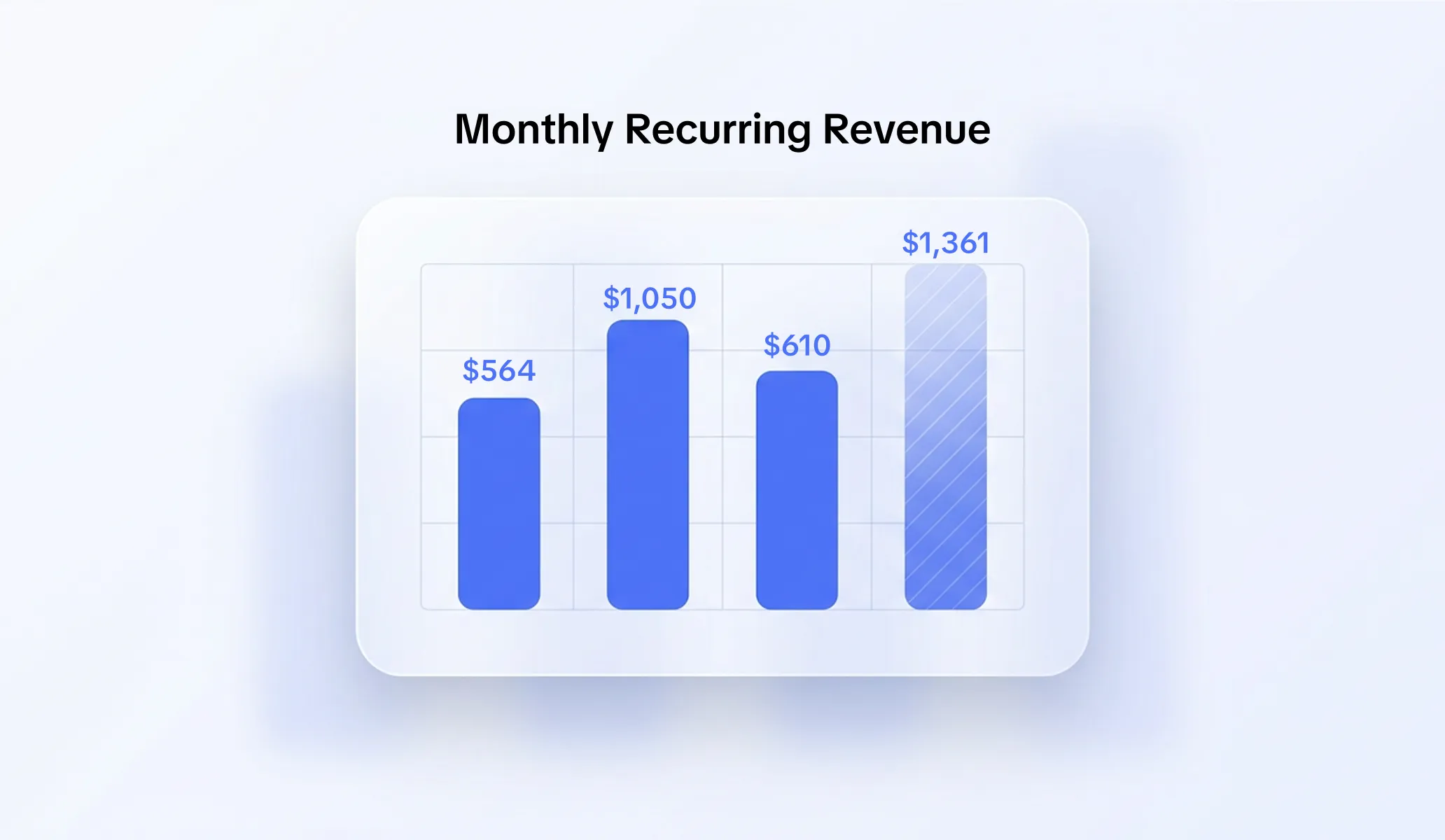
MRR (Monthly Recurring Revenue): How to Calculate MRR and Use MRR to Grow Your Subscription Business
Learn the meaning of MRR (monthly recurring revenue), how to calculate MRR using the MRR formula, and why MRR is important for SaaS companies. Discover how this important metric impacts cash flow per month, subscription business growth, and long-term performance for SaaS companies.
Subtica Team
Mobile App Performance Metrics: Top Metrics, Key KPIs & App Analytics for Mobile App Performance
Discover the most important mobile app metrics to track app performance, user engagement, and engagement and retention. Learn how mobile app analytics metrics, KPIs, and app analytics tools help optimize mobile app performance and drive growth.
Subtica Team
Revenue Management Software: Best Revenue Management Software to Streamline Revenue and Simplify Revenue Management
Learn how revenue management software and modern RMS platforms help subscription apps automate revenue operations, improve forecasting accuracy, and optimize recurring revenue with analytics and AI.
Subtica Team